
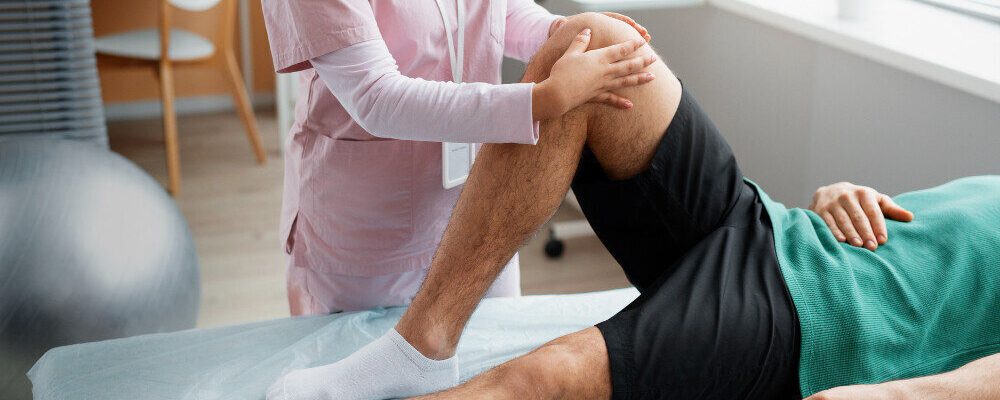
How Physio for Knee Arthritis in Richmond Hill Can Help With Pain
Physio for knee arthritis in Richmond Hill is often one of the most practical, non-surgical options for people who want to stay active while reducing daily knee pain and stiffness. Knee arthritis can make simple routines such as walking the dog, climbing stairs, or getting up from a chair feel unpredictable and discouraging. The good news is that physiotherapy can help you manage symptoms, improve function, and build confidence in your knee again through a targeted plan that fits your body, your lifestyle, and your goals.
Why Knee Arthritis Hurts and Why Movement Still Matters
Knee arthritis, most commonly osteoarthritis, usually involves gradual wear and changes in the joint, including cartilage thinning, inflammation, and altered mechanics. Pain may flare after activity, linger in the morning, or show up as swelling, grinding, or a “giving way” feeling. Many people respond by avoiding movement, but reduced activity can lead to weaker muscles, stiffer joints, and even more sensitivity over time.
Physiotherapy focuses on improving how the knee is loaded and supported, not simply “pushing through” pain. When your knee moves better and the surrounding muscles do their share of the work, the joint often becomes less irritable. That’s why a thoughtful program can be one of the most impactful tools for long-term arthritis management.
How Physiotherapy Reduces Knee Arthritis Pain
Physiotherapy helps in several ways by addressing strength, mobility, control, and daily movement habits that influence how your knee feels.
We will typically start with an assessment of your knee symptoms, walking pattern, range of motion, swelling, and strength of key support muscles, often including the quadriceps, glutes, and calves. We will also look at related factors like hip and ankle mobility, balance, and how you handle everyday tasks such as stairs or prolonged standing. This whole-body lens matters because knee arthritis pain is often worsened by compensation patterns above or below the joint.
From there, your plan may include:
- Strengthening to reduce stress on the joint by improving muscular support
- Mobility work to address stiffness and restore a comfortable range
- Neuromuscular training to improve alignment and control during movement
- Activity coaching so you can stay active without triggering frequent flare-ups
The Role of Exercise and Why It Works
Exercise is one of the best approaches for knee arthritis, and physiotherapy helps you do it safely and consistently. The right exercises can reduce pain sensitivity, increase joint tolerance, and improve function, even if imaging shows arthritis changes.
A common concern is: “Won’t strengthening make my arthritis worse?” In most cases, appropriately dosed strengthening helps because it improves the knee’s shock absorption and reduces strain during everyday movement. The key is selecting the right exercises and progressing them at the right pace. Physiotherapists can also modify positions and loads so you can train without aggravating the joint.
A Simple Example of What a Knee-Friendly Plan May Focus On
Most effective programs include a blend of elements rather than a single “magic” exercise:
- Building quadriceps and hip strength to support knee mechanics
- Improving balance and control to reduce awkward loading
- Gradually increasing walking or cycling tolerance
- Using symptom-guided progression to manage flare-ups confidently
Hands-On Care and Symptom Relief Strategies
While exercise is usually the foundation, hands-on physiotherapy can be helpful for short-term symptom relief and improving movement quality. Techniques such as manual therapy may reduce stiffness and help you move more comfortably, which can make it easier to follow through with exercises and daily activity.
Your physiotherapist may also recommend strategies to reduce irritation during flare-ups, such as pacing, modifying stairs, adjusting walking volume, or using supportive taping or bracing when appropriate. These supports aren’t meant to “replace” strengthening, but they can be useful tools that help you stay active while your knee calms down.
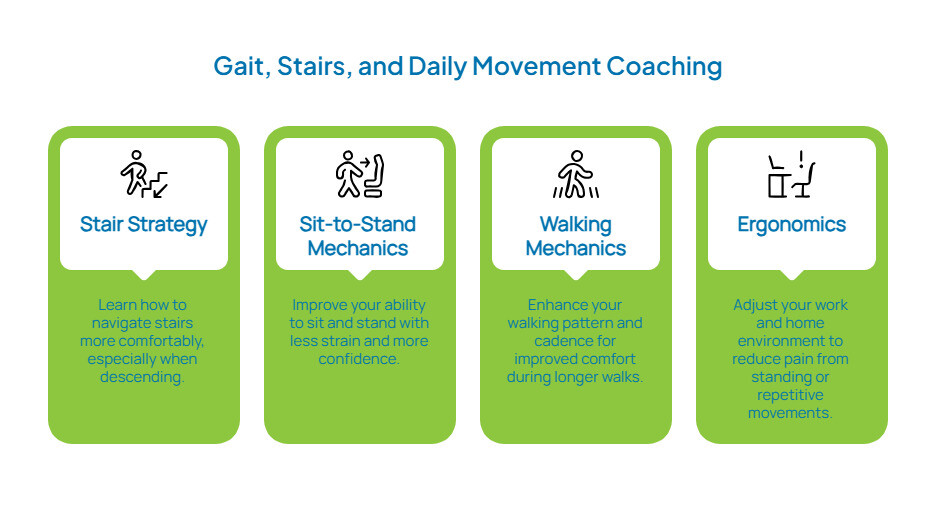
Gait, Stairs, and Daily Movement Coaching
Knee arthritis pain isn’t only about what’s happening inside the joint, it’s also about how your body moves. Small adjustments in walking pattern, step mechanics, or how you sit and stand can meaningfully change knee load. In physiotherapy, you may work on:
- Stair strategy, especially if descending hurts more than ascending
- Sit-to-stand mechanics to reduce strain and improve confidence
- Walking mechanics and cadence to improve comfort during longer walks
- Work and home ergonomics if standing or repetitive movement triggers pain


