

What to Expect From Post-Op Orthopedic Therapy Richmond Hill
Recovering from an orthopedic surgery can feel uncertain in the first days at home, when the incision is still healing and simple movements seem harder than they should. Structured rehabilitation is what turns a successful operation into a full return to daily life, and orthopedic therapy in Richmond Hill patients rely on is designed to guide that transition step by step. Knowing what the process involves helps you arrive at your first session prepared, ask better questions, and set realistic expectations for how your body will respond over the weeks ahead.
The First Sessions After Surgery
Post-operative rehabilitation usually begins soon after your procedure, sometimes within a few days, depending on your surgeon’s protocol. Early appointments focus less on strenuous exercise and more on protecting the surgical site while gently restoring movement. A therapist will review your surgical report, assess your current range of motion, check for swelling, and confirm any weight-bearing restrictions your surgeon has set. This early groundwork matters because the tissues around a repaired joint or bone respond best to controlled, gradual loading rather than either total rest or premature strain.
Expect your first visits to include education as much as hands-on treatment. You will learn how to move safely, how to manage discomfort, and how to recognize normal healing versus signs that warrant a call to your surgeon. Many people underestimate how much of early recovery is about consistency with small, unglamorous tasks done correctly at home.
What a Typical Recovery Plan Includes
No two recoveries are identical, but most post-operative programs share a common set of building blocks that evolve as you heal. A well-structured plan generally addresses:
- Pain and swelling management using techniques such as ice, elevation, and gentle manual therapy
- Restoring range of motion in the affected joint or limb through guided stretching
- Progressive strengthening to rebuild muscle that weakened during immobility
- Balance and coordination work to restore stability and confidence in movement
- Functional training that mirrors the everyday activities you want to return to

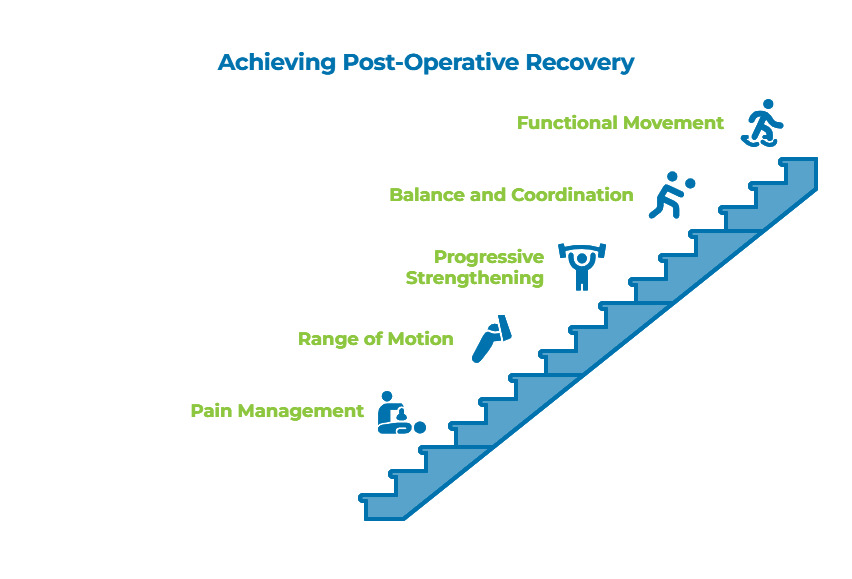
As you progress, sessions typically shift from protecting the repair toward rebuilding capacity. Strength work becomes more demanding, and your therapist may introduce activity-specific exercises that reflect your goals, whether that means climbing stairs without hesitation, returning to work, or resuming a sport. Progress is measured against milestones rather than a fixed calendar, since factors like age, the type of surgery, and overall health all influence how quickly tissues recover.
Staying on Track Between Appointments
The work done in the clinic is only part of the picture. Home exercise programs are a central part of post-operative rehabilitation, and following them as prescribed often makes the difference between a smooth recovery and a stalled one. Your therapist will give you a manageable set of exercises to complete between visits, along with guidance on how to adjust them if something feels off. Communication is key here. If an exercise causes sharp pain, unusual swelling, or setbacks, telling your therapist allows them to modify the plan rather than pushing through in a way that could compromise healing.
It also helps to be patient with the natural ups and downs of recovery. Some weeks bring noticeable gains, while others feel like a plateau. This rhythm is normal, and a good rehabilitation plan is built to accommodate it. Tracking small wins, such as bending a knee a little further or walking a slightly longer distance, keeps motivation steady during the longer middle stretch of recovery when progress can feel gradual.
Throughout the process, your therapist coordinates with the broader picture of your care, keeping your surgeon’s protocol in view and adjusting intensity as your body allows. This continuity ensures that the exercises you do are always appropriate for where you are in the healing timeline, reducing the risk of doing too much too soon or holding back longer than necessary.
Post-operative rehabilitation is a partnership between you, your therapist, and the surgical team that repaired the injury, and the effort you invest in it directly shapes the outcome. With a clear plan, honest communication, and steady commitment to your home program, most people are able to rebuild strength, regain confidence, and return to the activities that matter to them. If you are preparing for surgery or have recently had a procedure, connecting with a qualified physiotherapy team early gives you the structure and support to recover well and move forward with confidence.


